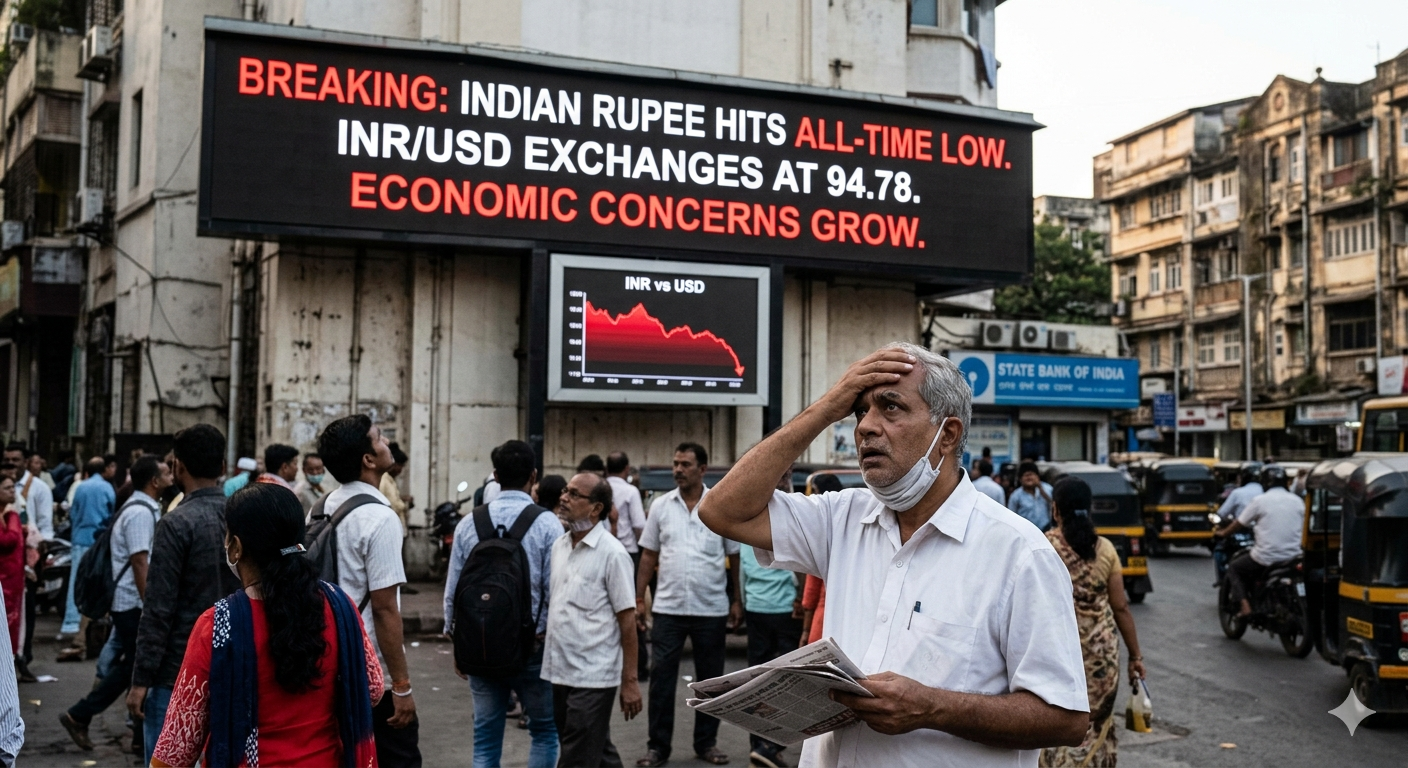

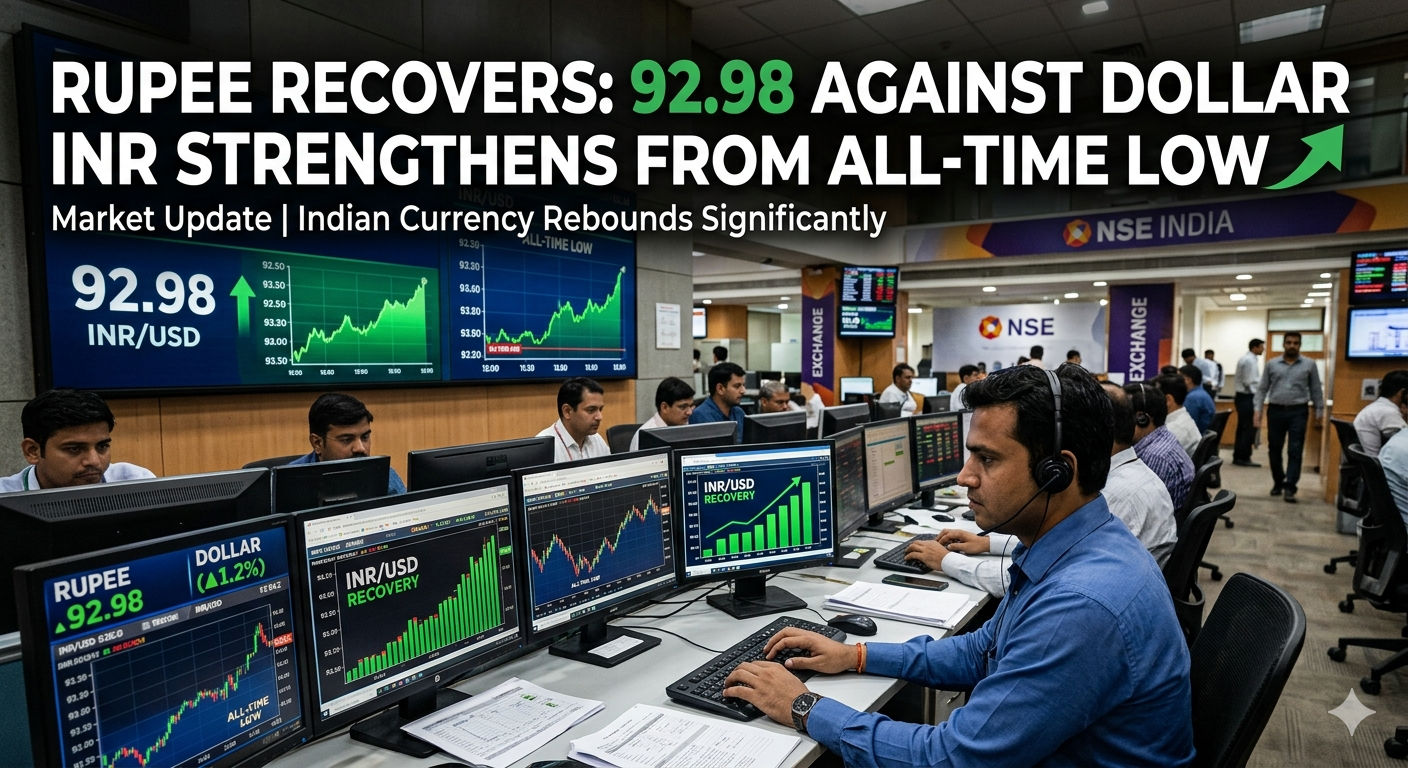
After slipping to a record low near 94, the Indian rupee has staged a modest recovery to around 92.98 against the US dollar. The rebound reflects a mix of global cues, central bank actions, and short-term market adjustments, though underlying pressure on the currency remains.
The Indian rupee has shown signs of recovery after a turbulent phase, climbing back to around 92.98 against the US dollar from its recent record low near 94. For many market watchers, this rebound offers a sense of relief—but the story behind it is more complex than a simple turnaround.
Currency movements rarely change direction without a trigger, and in this case, a combination of global and domestic factors appears to be at play. One of the most immediate reasons behind the rupee’s recovery is a slight cooling in the strength of the US dollar. Over the past few sessions, the dollar index has eased as expectations around aggressive rate hikes by the Federal Reserve have softened. When the dollar weakens globally, emerging market currencies like the rupee often get breathing space.
At the same time, there are strong indications that the Reserve Bank of India has stepped into the market to stabilise the currency. The central bank typically sells dollars from its reserves when the rupee comes under sharp pressure. While such interventions may not reverse the trend entirely, they help curb excessive volatility and support short-term recovery.
Another contributing factor is a temporary slowdown in foreign fund outflows. In recent weeks, heavy selling by foreign institutional investors had put pressure on the rupee. However, as global risk sentiment stabilised slightly, the pace of these outflows has eased, reducing demand for the dollar.
Importers, particularly oil companies, also play a crucial role in currency movement. With crude oil prices showing some stability after recent spikes, the immediate demand for dollars has moderated. Since India depends heavily on oil imports, even a small shift in crude prices can influence the rupee’s direction.
Despite this recovery, experts caution against viewing it as a full reversal. Structural challenges such as a widening trade deficit, global uncertainty, and still-elevated US interest rates continue to weigh on the rupee. In fact, many analysts believe the currency is currently in a “correction phase” rather than a sustained upward trend.
What lies ahead will depend largely on global developments. If US interest rates remain high and geopolitical tensions persist, the dollar could regain strength, putting renewed pressure on the rupee. On the other hand, any sustained drop in oil prices or return of foreign investments could support further recovery.
For now, the move from 94 to 92.98 reflects a market trying to find balance after extreme volatility. It is less a sign of strength and more a pause in a broader trend shaped by global economic forces.