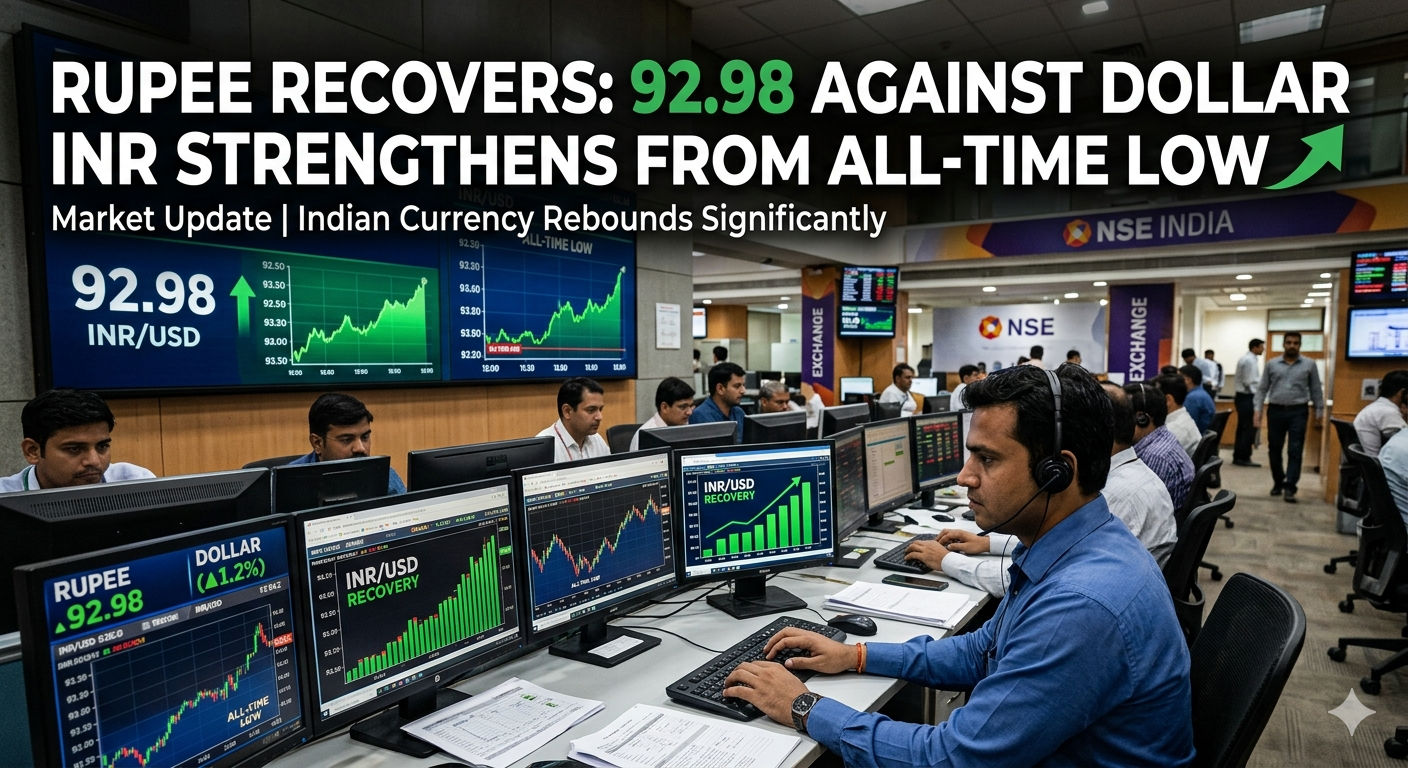

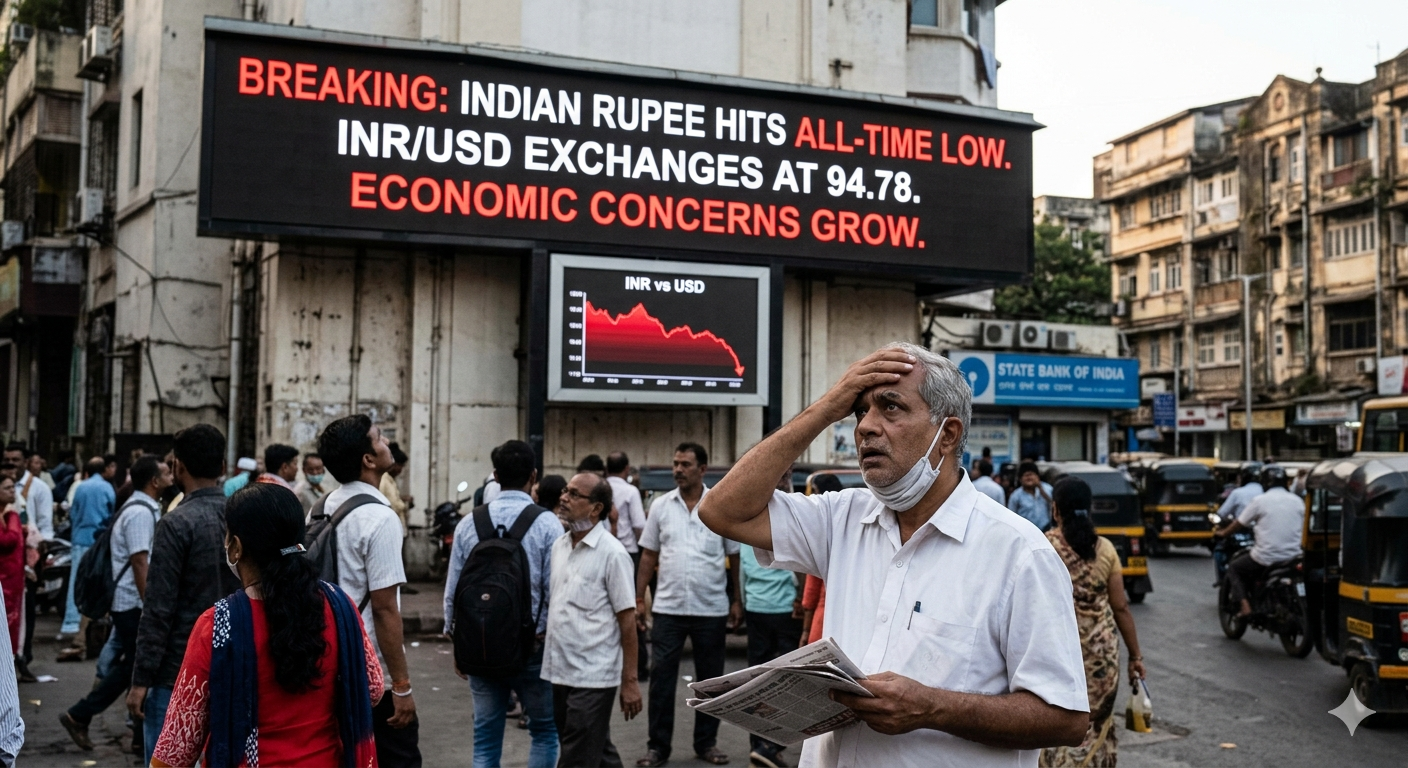
The Indian rupee slipped to a new low against the US dollar, as rising oil prices and global uncertainty continued to weigh on the currency.
The rupee’s steady decline over the past few weeks has now started drawing sharper attention in the market.During Friday’s trade, the currency weakened to around ₹94.8 against the US dollar, marking its lowest level so far. Dealers say the fall has been gradual, but the persistence is what’s making traders uneasy.
The move comes at a time when global markets are already on edge. With uncertainty building across regions, the dollar has been gaining strength, and emerging market currencies like the rupee are feeling the pressure.
Why the rupee is falling
- Crude oil getting expensive: India imports most of its oil, so higher prices increase dollar demand
- Foreign money moving out: Investors have been pulling funds from Indian equities
- Strong US dollar: Global uncertainty is pushing money toward safer assets
- Geopolitical tensions: Ongoing conflicts are keeping markets cautious
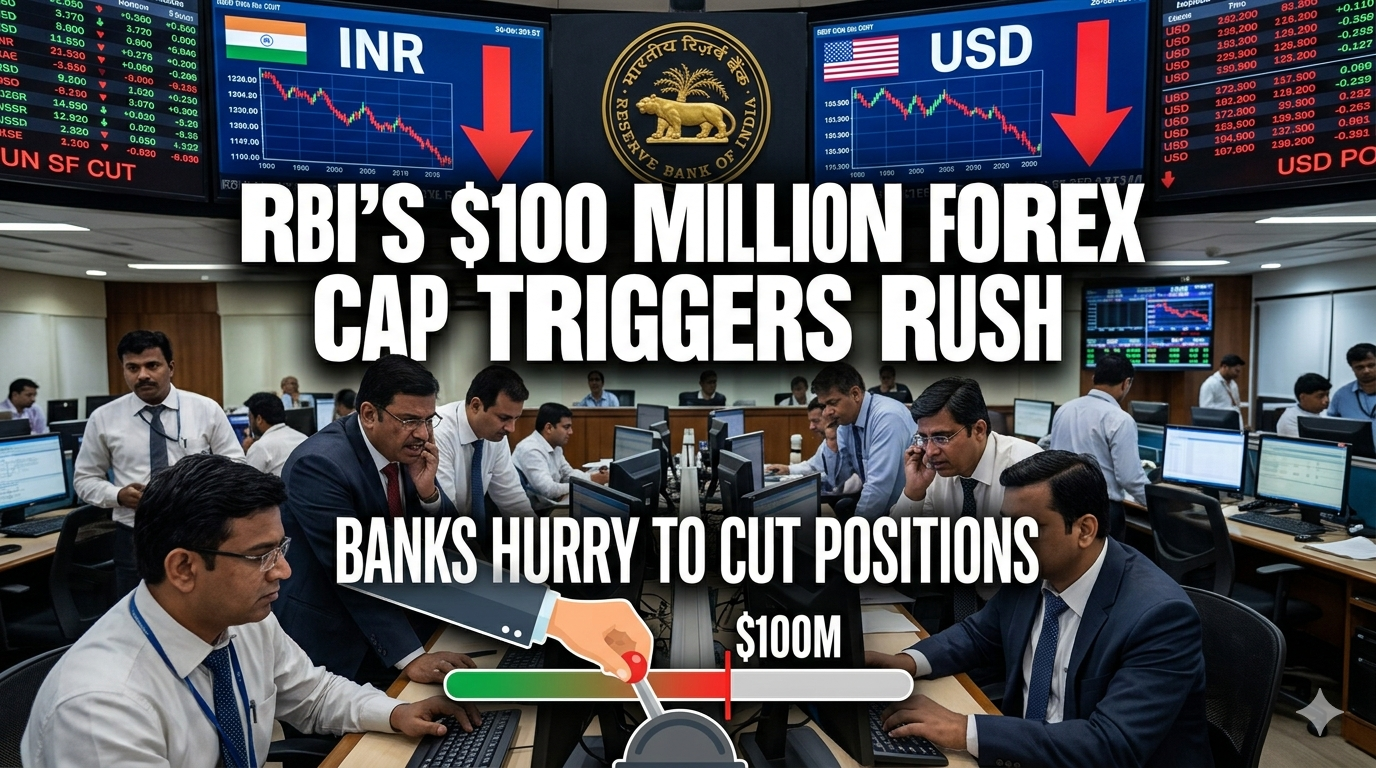
Back home, traders believe the Reserve Bank of India is keeping a close watch on the situation. While there’s no visible panic, there are signs that the central bank may be smoothing volatility behind the scenes.
For now, the fall is being described as controlled. But the impact tends to show up slowly—first in sectors that rely heavily on imports, and eventually in broader costs across the economy.
A forex dealer summed it up in a line often heard on trading desks: the rupee isn’t crashing, but it’s definitely under pressure.
Right now, the fall may look technical, but if it continues, it could quickly turn into a real-life cost-of-living issue for millions.