
The failure of the Women’s Reservation Bill in the Lok Sabha was not just a voting defeat—it exposed deep political divisions over implementation, timing, and power balance. While most parties supported the idea of 33% reservation for women, disagreements over delimitation and electoral impact ultimately brought the bill down.
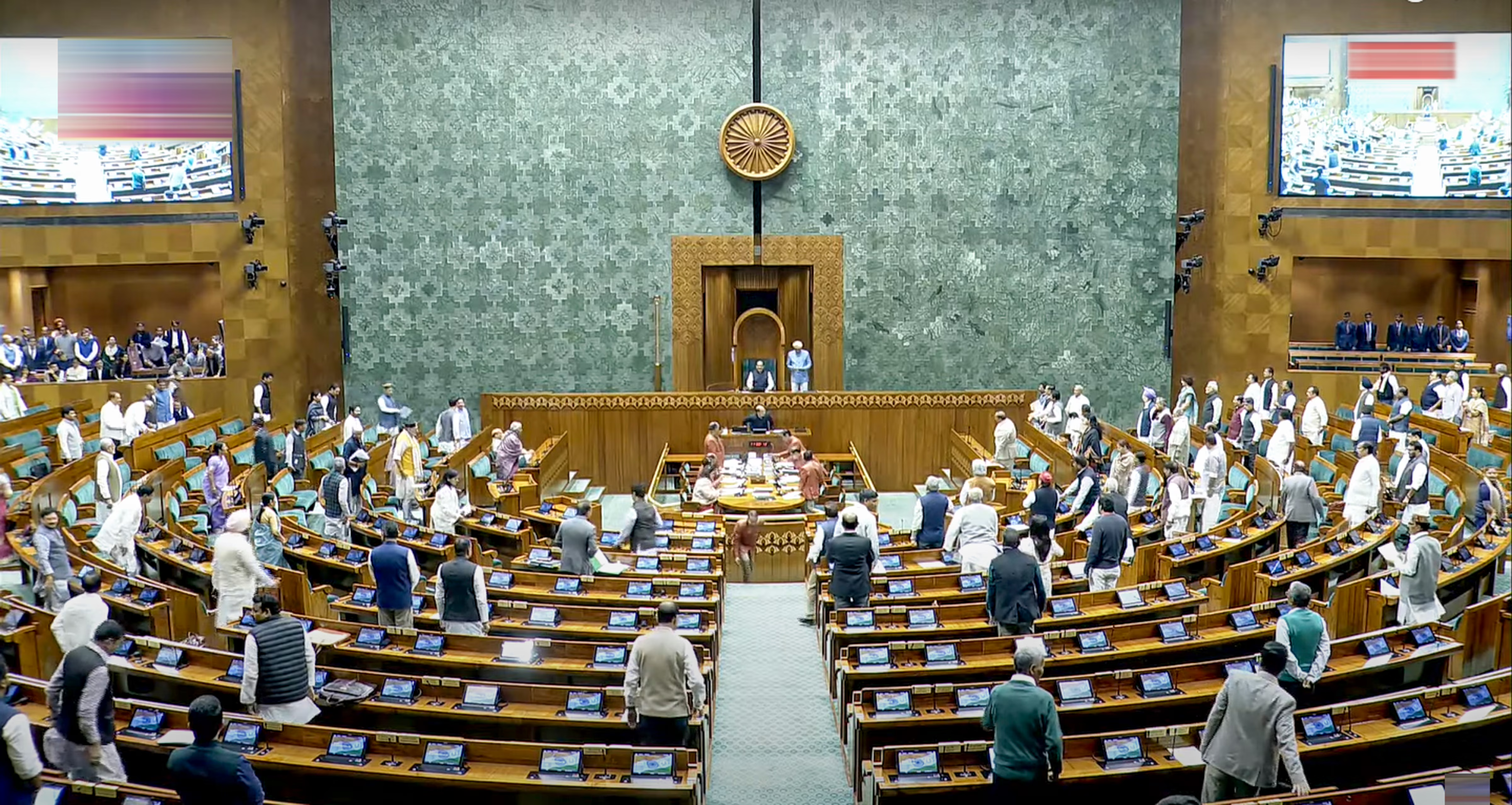
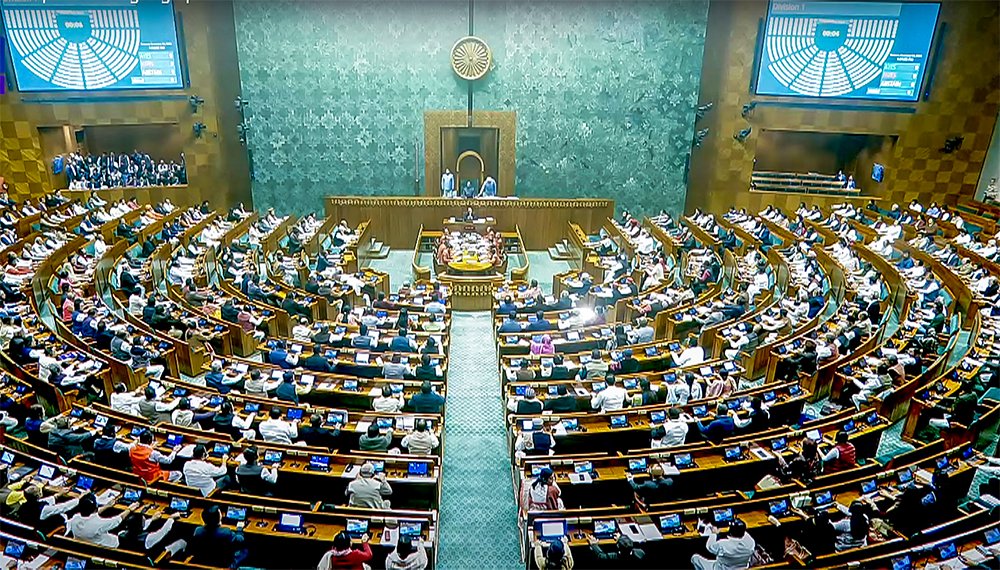
New Delhi: The Lok Sabha witnessed one of its most politically charged debates in recent times as the Women’s Reservation Bill, proposing 33% reservation for women in Parliament and state assemblies, failed to secure the numbers required for passage.
What made the outcome striking was not a lack of support in principle because across party lines, leaders repeatedly spoke in favor of women’s empowerment but the visible discomfort when the discussion moved from idea to execution.
As the voting unfolded, it became clear that the bill had turned into more than a social reform measure. It had evolved into a politically sensitive proposal tied to future electoral changes. The result was a divided House where support existed in speeches, but hesitation dominated the final vote.
The debate inside the Lok Sabha did not begin with opposition to women’s representation. In fact, that was the one point where there was almost universal agreement. Members across parties acknowledged that women remain underrepresented in Indian politics and that corrective measures are necessary.
But the turning point came when the structure of the bill was examined closely. The proposed reservation was not designed for immediate implementation. Instead, it was linked to the next census and a subsequent delimitation exercise—essentially the redrawing of constituencies based on population changes.
This is where the discomfort began to surface.
Several opposition leaders argued that delimitation itself is a politically sensitive process. States with higher population growth could gain more seats, potentially shifting political power. By linking women’s reservation to this future exercise, the bill was no longer just about gender representation it became entangled with questions of regional balance and political advantage.
Inside the House, this concern was repeatedly raised in different forms. Some members questioned why a long-pending reform should be delayed further by tying it to processes that have uncertain timelines. Others suggested that the linkage could be strategically used to reshape electoral dynamics in ways that are not immediately visible.
On the government’s side, the argument was framed differently. The bill was presented as a structured and constitutional approach, requiring alignment with census data and constituency boundaries to ensure fairness. According to this view, immediate implementation without such groundwork could create logistical and legal complications.
What followed was a debate that slowly drifted away from the core issue of women’s empowerment and moved into the territory of political trust. The question was no longer “Should women get 33% reservation?” but “Under what conditions, and who benefits politically from those conditions?”
As voting approached, this lack of trust became decisive.
Members who had spoken in favor of the bill hesitated when it came to endorsing its current form. The gap between ideological support and legislative approval became visible. The numbers ultimately reflected this divide, with the bill falling short of the special majority required for constitutional amendments.
The atmosphere in the House after the result was telling. There was no clear sense of victory or defeat only a recognition that an important reform had stalled once again, not because it lacked support, but because it lacked consensus on execution.
Beyond Parliament, the implications are significant. The failure sends a signal that even widely supported reforms can be delayed if they intersect with electoral strategy and power equations. It also raises a larger question about whether India’s political system can separate social reform from political calculation.
For many observers, this moment reflects a deeper pattern. Major reforms in India often succeed only when political interests align perfectly. In this case, that alignment did not happen.
The issue of women’s reservation is unlikely to disappear. If anything, this episode may intensify the debate, both inside and outside Parliament. Political parties may revisit the proposal, possibly with changes in structure or implementation timeline.
But for now, what remains is a missed opportunity one that shows how complex and layered decision-making in Indian democracy can be.