

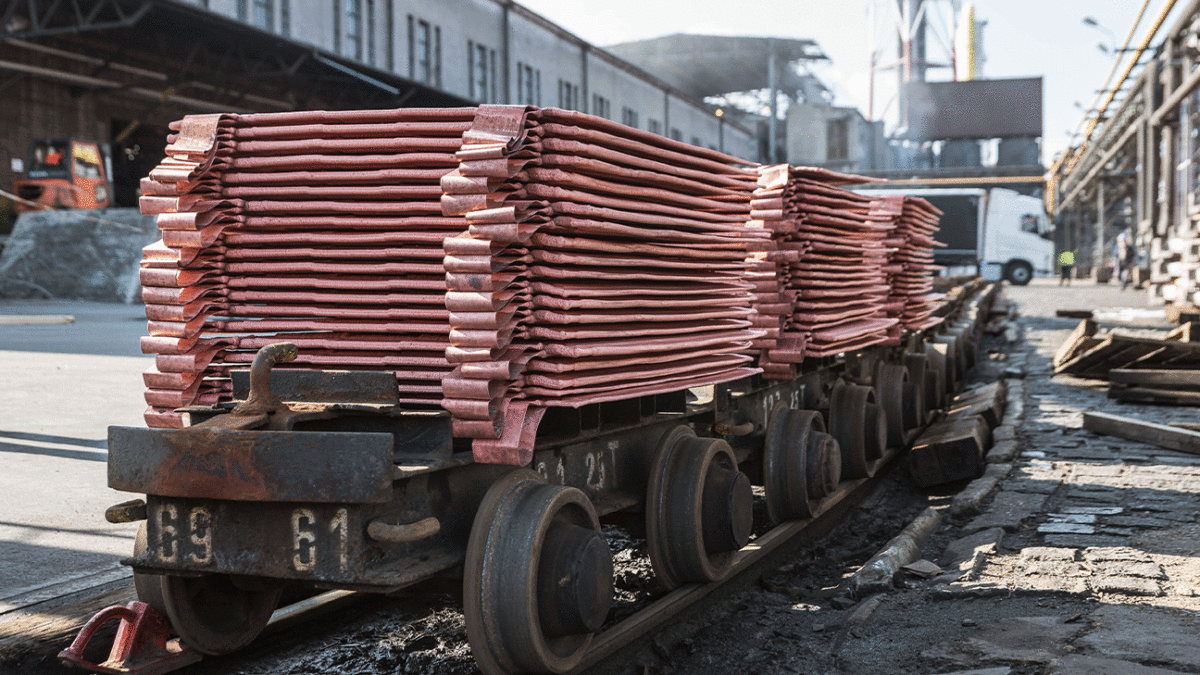
In a dramatic turn that caught even seasoned traders off guard, copper prices have exploded higher in 2026, shattering records and sending shockwaves through global economies. Fueled by a unique convergence of mine disruptions, insatiable demand from artificial intelligence infrastructure and green energy, plus trade policy ripples, the red metal has become the unlikely star of commodity markets. This article dives deep into the story behind the surge, its far-reaching effects, and what it means for businesses, investors, and everyday consumers.
The Copper Explosion: A Market on Fire
If you’ve been following commodity markets lately, you’ve probably felt the heat literally and figuratively. Copper, that humble reddish metal we’ve relied on for wiring everything from power grids to smartphones, has gone from a steady industrial workhorse to a high-flying superstar. In early 2026, prices blasted through the $13,000 per metric ton barrier on the London Metal Exchange (LME), with intraday peaks flirting with $14,500. On COMEX, futures surged past $6.40 per pound in recent sessions, levels that seemed unthinkable just a year or two ago.
What makes this surge unique isn’t just the height of the prices, but the perfect storm that ignited it. It wasn’t a single event like a massive strike or natural disaster (though those played roles). Instead, it was a multifaceted explosion: structural supply constraints colliding head-on with explosive new demand drivers, amplified by policy shifts and investor frenzy. Think of it as the commodity equivalent of a supernova years of building pressure finally releasing in spectacular fashion.
Unpacking the Supply Side: Why There’s Not Enough Copper
Let’s start with the fundamentals. Copper supply has been tightening for years, but 2025-2026 brought acute pain. Major producers like Chile and Indonesia faced operational headaches, including declining ore grades, environmental regulations, and unexpected disruptions. In one notable case, a significant landslide at a key Indonesian operation removed substantial tonnage from the market for months.
Adding fuel to the fire were ripple effects from geopolitical tensions. The ongoing situation in the Middle East disrupted supplies of sulfuric acid and sulfur—critical for copper processing and heap leaching. This forced smelters in top producer Chile to cut capacity, tightening refined copper availability further. China’s response, including export restrictions on related chemicals, only compounded the issue.
New mine development has lagged dramatically. Bringing a major copper project online takes 10-15 years or more, involving permitting, environmental reviews, and massive capital. Many announced projects have faced delays or cancellations due to community opposition, higher costs, and technical challenges. As a result, analysts project persistent deficits in the refined copper market, with some forecasts pointing to structural shortfalls extending well into the next decade.
Visible inventories tell part of the tale too. While U.S. stockpiles built up due to tariff fears, stocks elsewhere remained relatively lean, creating regional dislocations that savvy traders exploited.
The Demand Dynamo: AI, Electrification, and the Green Rush
On the flip side, demand has been nothing short of voracious. The AI boom is a game-changer. Hyperscale data centers powering the likes of ChatGPT, Gemini, and countless enterprise AI systems are copper hogs. A single large facility can consume tens of thousands of tons for power distribution, cooling systems, and cabling. With tech giants racing to build out infrastructure, this demand came online faster than anyone anticipated.
Electrification of the global economy adds another massive layer. Electric vehicles (EVs) require significantly more copper than traditional cars often 3-4 times as much in wiring and motors. Renewable energy projects, from wind farms to solar arrays, plus massive upgrades to aging power grids to handle higher loads, are devouring the metal. Governments worldwide, pushing net-zero targets, have accelerated these investments.
China, consuming over half of global copper, saw its manufacturing PMI hit multi-year highs, with post-holiday industrial activity rebounding strongly. Even with some economic headwinds, its appetite for the metal in construction, EVs, and tech remained robust. Chinese buyers notably stepped in during price dips, further supporting the floor.
Trade Policies and Market Psychology: The Amplifiers
Trade actions added a unique twist. Expectations and eventual implementationnof U.S. tariffs on copper imports led to heavy stockpiling stateside, creating a premium in American markets and pulling physical metal away from other regions. This inventory shift tightened global availability outside the U.S. and injected volatility.
Investor sentiment played a huge role too. With gold and silver also rallying, there was a broader rotation into hard assets. Speculative money flowed into copper futures, amplifying the move. Lower interest rates earlier in the cycle and a softer dollar made commodities more attractive. Financial players, including hedge funds, piled in, turning what might have been a solid uptrend into an explosive rally.
Ripple Effects: Who Wins, Who Hurts?
The consequences are far-reaching. For mining companies, especially efficient operators in stable jurisdictions, this is a windfall. Higher prices improve margins and could spur investment in new capacity though that relief is years away. Junior explorers and developers have seen their stock prices soar as investors hunt for leverage to the metal.
Downstream industries feel the pinch. Manufacturers of wires, cables, EVs, appliances, and electronics face higher input costs. Some are passing these on to consumers, contributing to inflationary pressures in certain sectors. Construction projects with heavy electrical components are seeing bids revised upward. Utilities grappling with grid modernization are rethinking budgets.
On a broader economic level, “Doctor Copper” is flashing a positive signal about industrial activity and growth expectations, particularly in tech and energy transition areas. However, sustained high prices risk slowing adoption in price-sensitive applications if alternatives (like aluminum in some wiring uses) gain traction.
Emerging markets reliant on copper exports, such as parts of Latin America and Africa, are benefiting from increased revenues, which could fund infrastructure or stabilize budgets—but only if they manage the windfall wisely.
Looking Ahead: Will the Explosion Sustain?
Forecasts vary, but most analysts see prices remaining elevated through 2026, with averages potentially in the $12,000-$13,000 range, though volatility is expected. Some see potential for moderation if supply responses kick in or if economic growth slows, but structural deficits suggest the bull market has legs.
Longer term, the outlook is bullish. Demand from AI, renewables, and EVs is secular, not cyclical. The challenge is closing the supply gap. Innovations in recycling, substitution, and mining technology will help, but they won’t fully offset the gap quickly.
For investors, copper offers exposure to multiple megatrends: decarbonization, digitalization, and infrastructure renewal. Ways to play it include physical ETFs, mining stocks, futures, or related equities but with the usual commodity risks of volatility and geopolitical surprises.
The Human Story Behind the Metal
Beyond the charts and forecasts, this copper story is deeply human. It’s about engineers designing more efficient data centers, miners working in remote pits under challenging conditions, policymakers balancing energy security with environmental goals, and families adopting EVs or solar panels. Copper quietly powers our modern world, and its price surge reminds us how interconnected and vulnerable our supply chains truly are.
As we navigate this explosive chapter, one thing is clear: the red metal is no longer just an industrial commodity. It’s a strategic asset in the 21st-century economy. Whether prices stabilize or climb further, the forces unleashed in 2026 will shape industries and investments for years to come.